
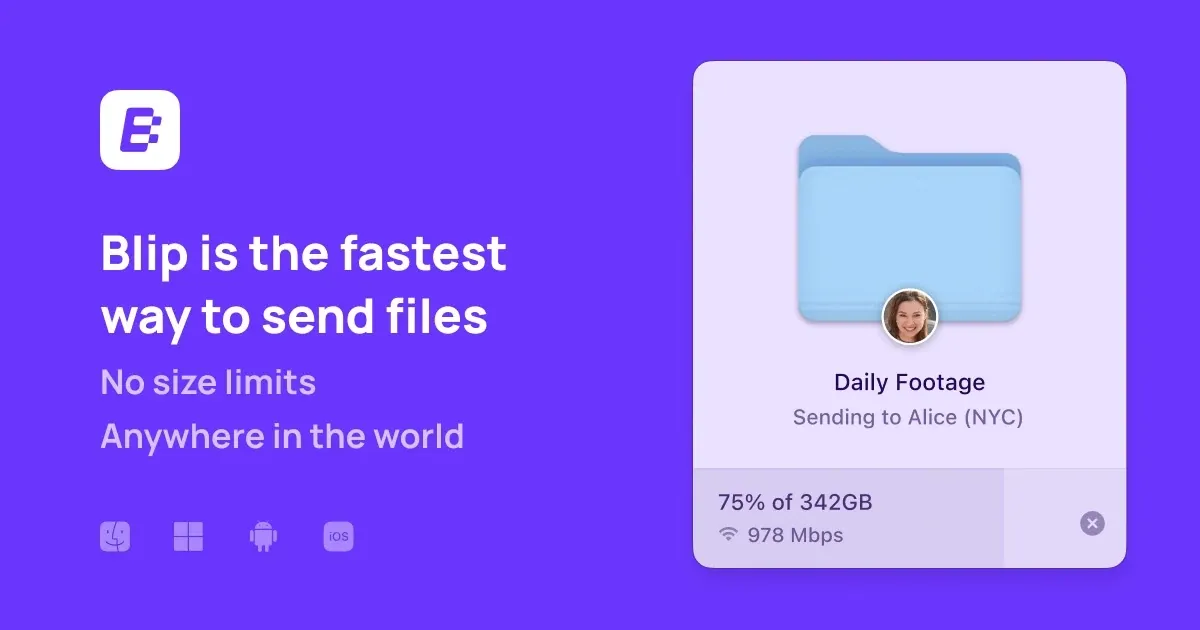
Blip is a cross-platform file-transfer app for sending original files and folders directly between people or devices. It is built for the moments when AirDrop is unavailable, cloud storage would require an unnecessary upload-and-share cycle, or a large project needs to cross operating systems.
The workflow is intentionally simple: choose a recipient or one of your own devices, select files or folders, and send. The recipient begins receiving immediately, and the transfer can continue or resume when a network changes, a drive is disconnected, or a device runs out of space.
Features
- Send files and folders of any size without zipping them first, preserving folder structure and original quality.
- Transfer directly between macOS, Windows, Linux, iPhone, iPad, and Android devices instead of being limited to one operating-system family.
- Start receiving before the sender has finished, avoiding the separate upload and download stages common to web-sharing services.
- Resume interrupted transfers after network changes, disconnected drives, or other common failures rather than starting again from zero.
- Use local-network direct connections when devices share a network, while still sending to people anywhere with an internet connection.
- Protect transfers with end-to-end encryption and send to selected Blip users instead of exposing files through public download links.
Where it fits
Blip is a strong choice for moving large video, audio, photo, or project folders between mixed devices and remote collaborators. It is particularly useful for people who need more than AirDrop but do not want to manage cloud storage copies or expiring links.
Both sender and recipient need Blip, and it is a transfer tool rather than a shared archive. Commercial work may require a paid plan, so current licensing should be checked before adopting it for a team.
Privacy and requirements
Blip requires an account with a verified email address and supports macOS 12.1 or later. Transfers are end-to-end encrypted and connect devices directly when possible; an encrypted relay is used when a direct route is unavailable. The company says it does not store or inspect transferred files, although it collects limited account and device information needed to operate the service.
Pricing
Blip includes a free tier. Business $25/user/month, billed annually.
 Droppy
 QSpace